
Can a new generation of aircraft surpass the legendary speed of the SR-71 Blackbird? The emergence of the MiG41 Foxbat2.0 has sparked intense debate among aviation enthusiasts and experts alike.
This high-speed aircraft is rumored to push the boundaries of speed, potentially eclipsing the iconic SR-71. With its cutting-edge technology and advanced design, the MiG41 Foxbat2.0 is poised to redefine the limits of flight.
The anticipation surrounding the MiG41 Foxbat2.0 is palpable, with many wondering if it will live up to its hype. As we delve into the details of this aircraft, we will explore its capabilities and compare its performance to that of the SR-71.
Key Takeaways
- The MiG41 Foxbat2.0 is a new generation high-speed aircraft.
- It is rumored to be faster than the legendary SR-71 Blackbird.
- The aircraft features cutting-edge technology and advanced design.
- Its performance is expected to redefine the limits of flight.
- The MiG41 Foxbat2.0 is generating significant interest among aviation enthusiasts.
The Evolution of Supersonic Military Aircraft
The development of supersonic military aircraft has been a hallmark of modern aviation technology, driven by the need for speed and strategic superiority. This evolution has been marked by significant milestones, particularly during the Cold War era, where the race for supersonic capabilities became a critical aspect of military strategy.
The Cold War Speed Race
During the Cold War, the United States and the Soviet Union engaged in a fierce competition to develop faster and more advanced military aircraft. This period saw the introduction of the first supersonic jets, which were capable of breaking the sound barrier. The supersonic jet technology became a symbol of military prowess, with both sides investing heavily in research and development to stay ahead.
The development of these high-speed aircraft was not just about achieving supersonic flight; it was also about enhancing military aviation technology to gain a strategic edge. The innovations that emerged during this period laid the groundwork for future advancements in high-speed aircraft.
Breaking the Mach Barrier and Beyond
Breaking the Mach barrier was a significant achievement, marking the transition from subsonic to supersonic flight. This breakthrough was followed by continued research into even higher speeds, pushing the boundaries of what was thought possible. The development of aircraft capable of flying at speeds beyond Mach 3 represented a new frontier in high-speed aircraft design.
The technological innovations that enabled these advancements included improvements in engine power, aerodynamic design, and materials science. These developments not only enhanced the performance of military aircraft but also contributed to the broader field of aviation, paving the way for future generations of supersonic jets.
The SR-71 Blackbird: America’s Speed Champion
Lockheed’s SR-71 Blackbird stands as a monumental achievement in the history of military aviation technology. The SR-71 was designed to operate at extreme altitudes and speeds, far beyond the capabilities of other aircraft of its time.
Birth of the Blackbird: Lockheed’s Marvel
The development of the SR-71 began in the late 1950s as a response to the U-2 spy plane’s limitations. Lockheed’s Skunk Works, led by Clarence “Kelly” Johnson, was tasked with creating an aircraft that could fly higher and faster than any other. The result was the SR-71, a marvel of engineering that combined innovative design with cutting-edge technology.
Engineering Feats and Design Innovations
The SR-71 incorporated several groundbreaking engineering feats, including its unique shape, which was designed to reduce radar cross-section. The aircraft was made primarily of titanium, allowing it to withstand the extreme temperatures generated by high-speed flight. Key design innovations included:
- Regenerative cooling system to manage heat
- Specially developed fuel to withstand high temperatures
- Innovative airframe design for reduced radar signature
Speed Records That Stood for Generations
The SR-71 Blackbird set numerous speed and altitude records, many of which stood for decades. On July 28, 1976, an SR-71 achieved an absolute altitude record of 85,069 feet. The aircraft’s speed records were equally impressive, with sustained speeds over Mach 3.5. These achievements cemented the SR-71’s status as a legend in military aviation.
The Original MiG-25 Foxbat: Soviet’s High-Speed Response
The Soviet Union’s response to Western high-speed aircraft came in the form of the MiG-25 Foxbat. This high-speed interceptor was designed to counter the threat posed by fast aircraft like the SR-71 Blackbird. The MiG-25’s development was a significant milestone in the Soviet Union’s military aviation history.
Development History and Strategic Purpose
The MiG-25 was developed in the 1960s by the Mikoyan-Gurevich design bureau. Its primary purpose was to intercept and destroy high-speed, high-altitude targets. The aircraft’s design reflected the Soviet Union’s need for a fast and powerful interceptor to counter Western military aircraft.
Key Development Features:
- High-speed capabilities
- Advanced radar systems
- Powerful engines
Technical Capabilities and Limitations
The MiG-25 boasted impressive technical capabilities, including a top speed of over Mach 3. However, it also had limitations, such as high fuel consumption and limited maneuverability at lower speeds.
| Capability | Specification |
|---|---|
| Top Speed | Over Mach 3 |
| Service Ceiling | 24,400 meters |
| Range | 1,730 kilometers |
The MiG-25’s development and deployment marked a significant point in the Cold War, showcasing the Soviet Union’s capabilities in high-speed military aviation. Its legacy continues to influence modern military aviation technology.
Faster Than The SR-71 – The MiG41 Foxbat2.0
Russia’s latest hypersonic aircraft, the MiG41 Foxbat2.0, is poised to redefine the boundaries of speed in military aviation. As the successor to the MiG-25 Foxbat, the MiG41 is shrouded in secrecy, but its development has sparked significant interest globally.
Russia’s Hypersonic Ambitions Unveiled
The development of the MiG41 Foxbat2.0 is a testament to Russia’s commitment to advancing its military aviation capabilities. This project is part of a broader strategy to enhance Russia’s air force with cutting-edge technology, focusing on hypersonic speeds that can outmaneuver current defense systems.
The MiG41’s design and capabilities are centered around achieving superior speed and maneuverability. With a rumored top speed exceeding Mach 5, the MiG41 is expected to outperform its predecessors and competitors alike.
Project Timeline and Development Challenges
The MiG41 project has been ongoing for several years, with various reports indicating different milestones and challenges. Development has not been without its hurdles, including technological and engineering obstacles inherent in creating a hypersonic aircraft.
- Key challenges include:
- Developing materials that can withstand extreme temperatures and stresses.
- Creating propulsion systems capable of achieving and sustaining hypersonic speeds.
- Integrating advanced avionics and electronic warfare systems.
Claimed Performance Specifications
The claimed performance specifications of the MiG41 Foxbat2.0 are impressive, with sources suggesting it can achieve speeds faster than the SR-71 Blackbird, a record-holder for decades.
| Specification | MiG41 Foxbat2.0 | SR-71 Blackbird |
|---|---|---|
| Top Speed | Over Mach 5 | Mach 3.56 |
| Service Ceiling | Above 100,000 feet | 85,000 feet |
The MiG41 Foxbat2.0 represents a significant leap forward in military aviation, with its development underscoring Russia’s ambitions in hypersonic flight. As more information becomes available, the true extent of its capabilities will become clearer.
Groundbreaking Propulsion Technology
The propulsion technology behind the MiG41 Foxbat2.0 is a significant factor in its high-speed capabilities. This section delves into the advancements that make the MiG41 Foxbat2.0 a formidable asset in military aviation.
Next-Generation Engine Developments
The MiG41 Foxbat2.0 is powered by a next-generation engine that represents a substantial improvement over its predecessors. These engines are designed to provide higher thrust-to-weight ratios, enabling the aircraft to achieve hypersonic speeds. The engine’s design incorporates advanced materials and cooling systems to manage the extreme temperatures generated at such high velocities.
Fuel Systems and Consumption Rates
The fuel system of the MiG41 Foxbat2.0 is optimized for high-speed flight, utilizing advanced fuel management techniques to minimize consumption while maximizing performance. The aircraft’s fuel efficiency is crucial for its operational range and mission duration. Here’s a comparison of the fuel consumption rates between the MiG41 Foxbat2.0 and its predecessor:
| Aircraft Model | Fuel Consumption Rate (kg/h) | Operational Range (km) |
|---|---|---|
| MiG-25 | 5000 | 1730 |
| MiG41 Foxbat2.0 | 4500 | 2000 |
Thermal Management at Extreme Velocities
At hypersonic speeds, thermal management becomes a critical challenge. The MiG41 Foxbat2.0 employs advanced thermal management systems to regulate the temperature of its engine and airframe. These systems are designed to maintain structural integrity and ensure optimal performance even under extreme conditions.
The use of advanced composites and sophisticated cooling techniques enables the MiG41 Foxbat2.0 to withstand the heat generated by friction at high speeds. This capability is essential for the aircraft’s survivability and effectiveness in combat scenarios.
Materials Science and Aerodynamic Innovations
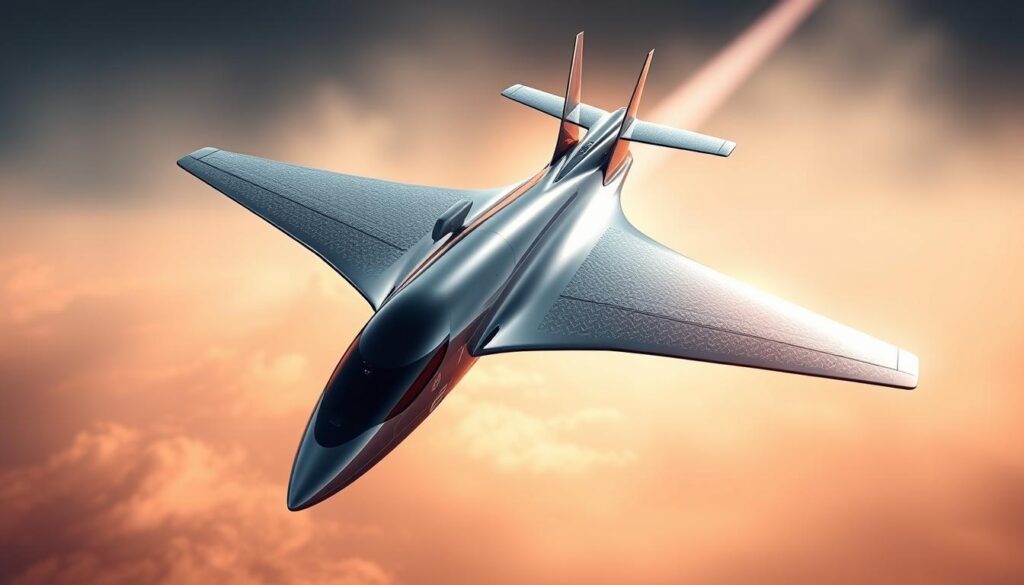
The MiG41 Foxbat2.0 represents a significant leap forward in military aviation technology, thanks to its innovative materials and aerodynamic design. This aircraft’s exceptional performance is not just a result of its powerful engines, but also the advanced materials used in its construction and its streamlined aerodynamic features.
Heat-Resistant Composites and Alloys
The MiG41 Foxbat2.0 is built with cutting-edge heat-resistant composites and alloys that can withstand the extreme temperatures generated during hypersonic flight. These advanced materials are crucial for maintaining the structural integrity of the aircraft at speeds that were previously unimaginable.
The use of such materials not only enhances the aircraft’s durability but also allows it to operate at higher temperatures without compromising its performance. This is a significant advancement in military aviation technology, enabling the MiG41 Foxbat2.0 to achieve speeds that surpass those of its predecessors.
Radar Cross-Section Reduction Features
In addition to its impressive speed, the MiG41 Foxbat2.0 also incorporates radar cross-section reduction features to enhance its stealth capabilities. By using advanced materials and design techniques, the aircraft is able to minimize its radar signature, making it harder to detect by enemy radar systems.
This combination of high speed and stealth capabilities makes the MiG41 Foxbat2.0 a formidable opponent in the skies, capable of outmaneuvering and outrunning most adversaries. The integration of such features underscores the significant advancements in high-speed aircraft design.
Structural Integrity at Hypersonic Speeds
Maintaining structural integrity at hypersonic speeds is a significant challenge, but the MiG41 Foxbat2.0’s designers have successfully addressed this issue through innovative engineering solutions. The aircraft’s structure is designed to withstand the stresses and strains associated with supersonic flight, ensuring that it remains stable and controllable even at extreme velocities.
The result is an aircraft that not only achieves remarkable speeds but also maintains its integrity and performance throughout its operational envelope. This represents a major breakthrough in the development of supersonic jets, pushing the boundaries of what is possible in military aviation.
Combat Capabilities and Strategic Applications
The MiG41 Foxbat2.0 represents a significant leap in military aviation technology, boasting advanced combat capabilities. This next-generation fighter is designed to excel in various combat scenarios, leveraging its advanced technology to outmaneuver potential adversaries.
Weapons Systems and Payload Capacity
The MiG41 Foxbat2.0 is equipped with a sophisticated weapons system, capable of carrying a variety of payloads. This includes advanced missiles and precision-guided munitions, enhancing its combat effectiveness. The aircraft’s design allows for flexibility in mission planning, accommodating different weapon configurations as needed.
Advanced Avionics and Electronic Warfare
A key feature of the MiG41 Foxbat2.0 is its advanced avionics suite, which includes state-of-the-art radar systems and electronic warfare capabilities. These systems enable the aircraft to detect and engage targets at long range while countering enemy electronic warfare efforts.
Operational Range and Mission Profiles
The MiG41 Foxbat2.0 boasts an impressive operational range, allowing it to undertake a variety of mission profiles. From air superiority to reconnaissance, the aircraft’s capabilities make it a versatile asset for military forces.
Comparing Giants: MiG-41 vs. SR-71 Performance Analysis
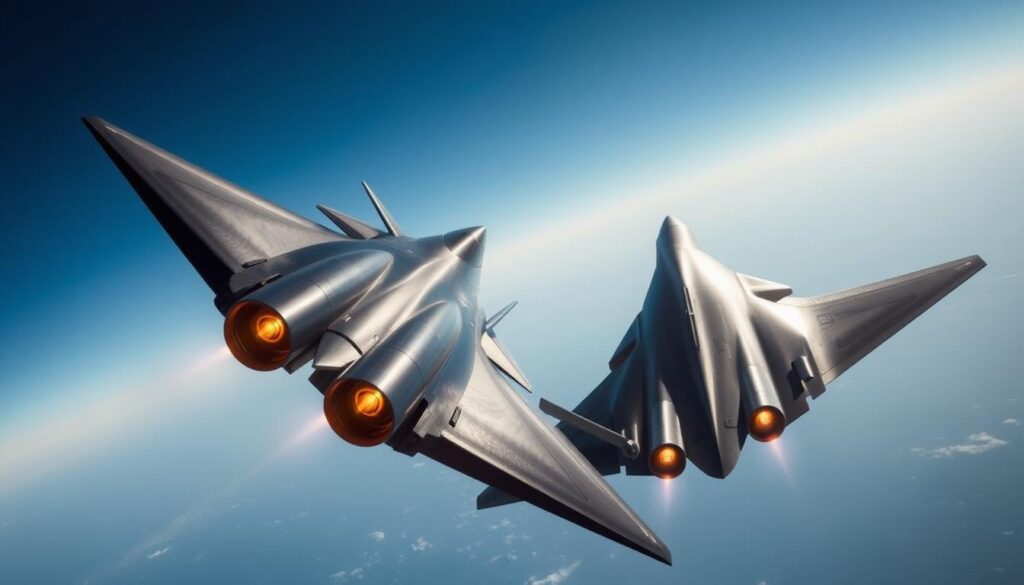
The MiG-41 Foxbat2.0 and the SR-71 Blackbird are two of the most advanced supersonic aircraft ever built, with each representing the pinnacle of its respective era’s technological capabilities. This comparison aims to highlight their differences in speed, maneuverability, and technology.
Speed and Altitude Capabilities
The SR-71 Blackbird was renowned for its exceptional speed, reaching over Mach 3.5. However, the MiG-41 Foxbat2.0 is claimed to exceed Mach 4, potentially making it faster than the SR-71. In terms of altitude, both aircraft have demonstrated remarkable capabilities, with the SR-71 operating at over 80,000 feet and the MiG-41 potentially surpassing this ceiling.
Maneuverability and Tactical Flexibility
While the SR-71 was designed primarily for reconnaissance, its maneuverability was limited due to its focus on speed. The MiG-41, on the other hand, is expected to offer enhanced tactical flexibility, potentially incorporating advanced avionics and weaponry systems that allow for a broader range of mission profiles.
Technological Generations Apart
The SR-71 and MiG-41 represent different generations of aerospace technology. The MiG-41 benefits from advancements in materials science, propulsion systems, and electronic warfare capabilities. This technological leap is expected to give the MiG-41 a significant edge in terms of performance and survivability.
Conclusion: Redefining the Boundaries of Military Aviation
The MiG41 Foxbat2.0 represents a significant leap forward in high-speed aircraft technology, pushing the boundaries of what is possible in military aviation. With its advanced propulsion systems and cutting-edge materials, this supersonic jet is poised to challenge the dominance of existing speed champions like the SR-71 Blackbird.
As military aviation technology continues to evolve, the MiG41 Foxbat2.0 is set to play a crucial role in shaping the future of high-speed flight. Its development reflects a broader trend towards hypersonic capabilities, with significant implications for both military strategy and the aerospace industry as a whole.
The emergence of the MiG41 Foxbat2.0 underscores the ongoing competition in military aviation, driving innovation and advancement in high-speed aircraft design. As this technology continues to mature, it is likely to have far-reaching consequences for global military dynamics and the future of supersonic flight.
FAQ
What is the MiG41 Foxbat2.0?
The MiG41 Foxbat2.0 is a next-generation, high-speed military aircraft developed by Russia, touted to be faster than the legendary SR-71 Blackbird.
How does the MiG41 Foxbat2.0 compare to the SR-71 in terms of speed?
The MiG41 Foxbat2.0 is claimed to surpass the SR-71 in speed, leveraging advanced propulsion technology and materials science innovations to achieve hypersonic velocities.
What advancements make the MiG41 Foxbat2.0 capable of such high speeds?
The MiG41 Foxbat2.0 benefits from next-generation engine developments, heat-resistant composites and alloys, and aerodynamic innovations that enable it to maintain structural integrity at extreme velocities.
What is the significance of the MiG-25 Foxbat in the history of high-speed military aircraft?
The MiG-25 Foxbat was the Soviet Union’s response to Western high-speed aircraft, showcasing significant technical capabilities and limitations that paved the way for future developments like the MiG41 Foxbat2.0.
How does the propulsion technology of the MiG41 Foxbat2.0 differ from its predecessors?
The MiG41 Foxbat2.0 features advanced propulsion technology, including next-generation engines and sophisticated fuel systems, designed to manage the challenges of hypersonic flight, such as thermal management.
What are the strategic implications of the MiG41 Foxbat2.0’s capabilities?
The MiG41 Foxbat2.0’s speed, maneuverability, and advanced avionics make it a formidable asset in military aviation, potentially redefining combat capabilities and strategic applications.
How does the SR-71 Blackbird compare to the MiG41 Foxbat2.0 in terms of technological generation?
The SR-71 and MiG41 Foxbat2.0 represent different technological generations, with the MiG41 incorporating modern advancements in materials science, aerodynamics, and propulsion technology.
What are the claimed performance specifications of the MiG41 Foxbat2.0?
While exact figures may vary, the MiG41 Foxbat2.0 is claimed to achieve hypersonic speeds, significantly surpassing the SR-71’s records, and boasts advanced combat and surveillance capabilities.